Skip to content

Development of robust iPSC-based α-Synuclein, Tau and TDP-43 aggregation models for drug discovery​

Human iPSC-based aggregation models for α-Synuclein, Tau and TDP-43
Download now
ADPD_2026_poster

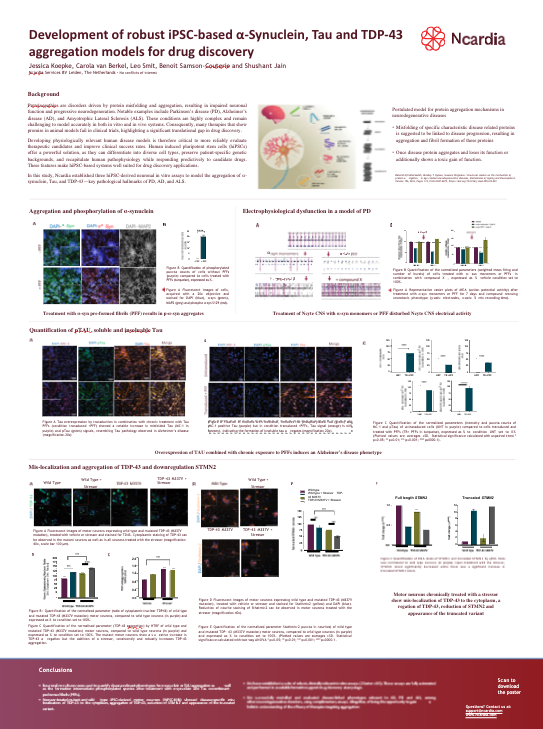
This poster presents Ncardia’s human iPSC-derived neuronal assays designed to model key protein aggregation mechanisms underlying Parkinson’s disease, Alzheimer’s disease, and ALS.

Download it now for a closer look at:

  • How α-synuclein pre-formed fibrils induce phosphorylation and aggregation in human neuronal cultures, creating quantifiable Parkinson’s disease–relevant readouts.

  • Tau overexpression combined with chronic Tau PFF exposure, generating misfolded, phosphorylated, and insoluble Tau species characteristic of Alzheimer’s pathology.

  • Human iPSC-derived motor neurons modeling TDP-43 mislocalization, aggregation, STMN2 reduction, and truncated STMN2 formation linked to ALS.

  • Electrophysiological readouts showing how protein aggregation disrupts neuronal network activity.

  • Automated, scalable assay formats with strong performance metrics (Z-factor > 0.5), suitable for screening aggregation-targeting therapeutics.

Download the Poster


Get the Poster Now!

Whether you are studying early aggregation biology or advancing compounds into structured screening workflows, these human iPSC-derived proteinopathy models provide a reproducible platform to evaluate therapeutic strategies targeting α-synuclein, Tau, and TDP-43 driven neurodegeneration.


Download the poster by filling out the form below: