- Characterised GABAergic neuronal population
- Relevant for inhibitory signalling and E/I balance research
- Suitable for CNS drug discovery and disease modelling
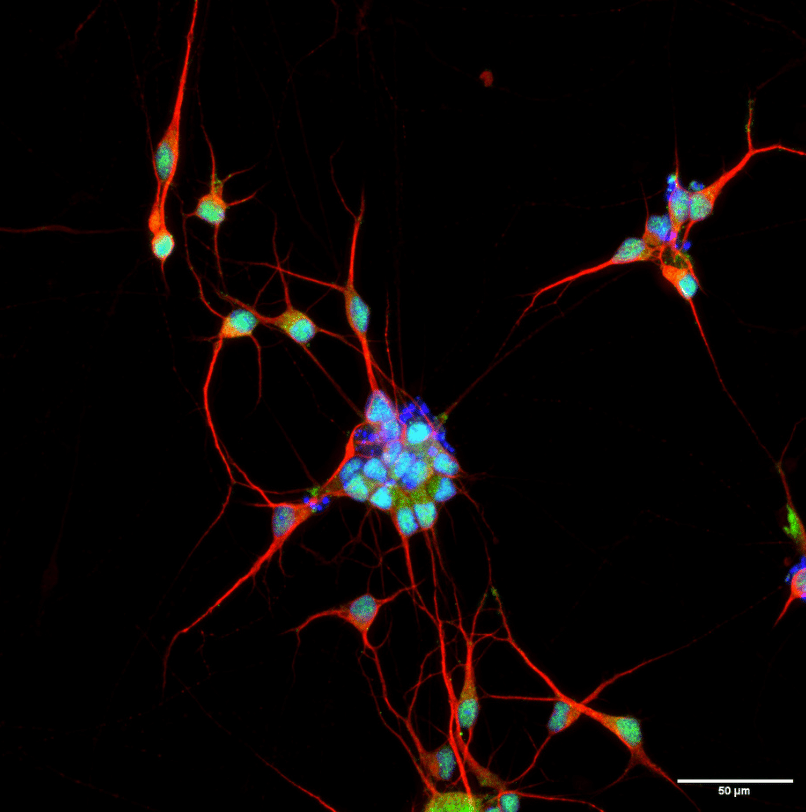
Ncyte® GABAergic Neurons develop characteristic neuronal morphology and extensive neurite growth following thawing and culture.
GABAergic neuronal identity is demonstrated through expression of neuronal and subtype-associated markers, including TUBB3, PVALB and GAD1.
Differentiated neurons can be observed from Day 1–2 post-thaw. For more mature neuronal morphology, culture until at least Day 7 is recommended.
Immunofluorescence staining of Ncyte® GABAergic Neurons demonstrates expression of TUBB3and PVALB.
GABAergic neurons are an important inhibitory component of human neuronal networks and contribute to the regulation of excitatory/inhibitory balance in the central nervous system.
Ncyte® GABAergic Neurons express GABAergic neuron-associated markers including PVALB and GAD1, supporting their use as a human neuronal model for studying inhibitory neuronal biology.
This makes the cells relevant for research into biological mechanisms where altered inhibitory signalling, network balance, epilepsy and seizure modelling are of interest.
Ncyte® GABAergic Neurons are highly suitable for studies of inhibitory signalling, excitatory/inhibitory balance and disease modelling of CNS disorders where altered GABAergic function plays an important role.
They can support research in areas including epilepsy, neurodevelopmental disorders and psychiatric disease, as well as studies of GABAergic pharmacology and interneuron biology.
Our team of neuroscientists is experienced in assay development and functional screening and can help you assess the efficacy and safety of therapeutic candidates in human-relevant neuronal models.
Human iPSC-derived atrial cardiomyocytes
Neural
Human iPSC-derived astrocytes
Vascular
Human iPSC-derived vascular endothelial cells
Neural.png)
Human iPSC-derived excitatory glutamatergic neurons
NeuralHuman iPSC-derived GABAergic neurons
Cardiac.png)
Human iPSC-derived 3D cardiac microtissue model
Neural
Human iPSC-derived microglia
Cardiac
Non-Human Primate Cynomolgus iPSC-Derived Ventricular-Like Cardiomyocytes
Vascular
Human iPSC-derived vascular smooth muscle cells
Cardiac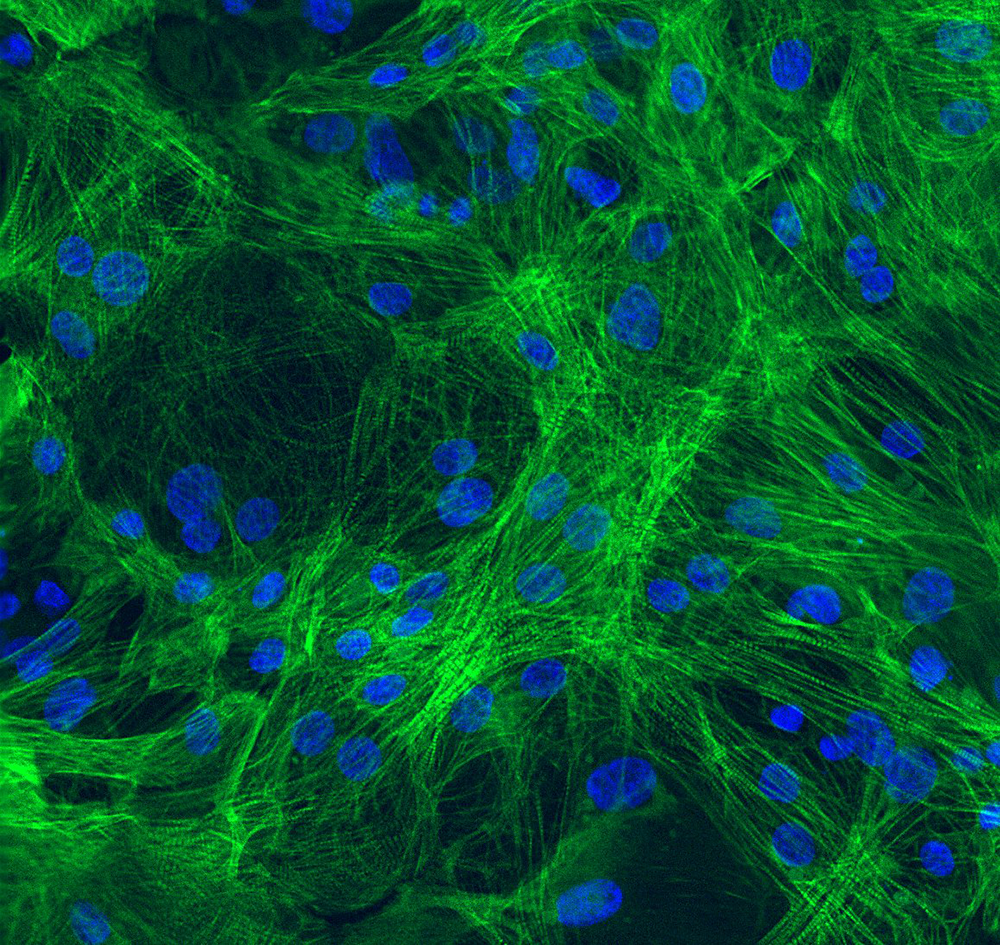
Human iPSC-derived ventricular cardiomyocytes