Skip to content

AAV Transduction Efficiency in Human iPSC-Derived Cardiomyocytes

Evaluating the Transduction Efficiency of Different AAV Serotypes on Human iPSC-derived Cardiomyocytes
Download now
Screenshot 2026-04-30 at 11.32.28 AM

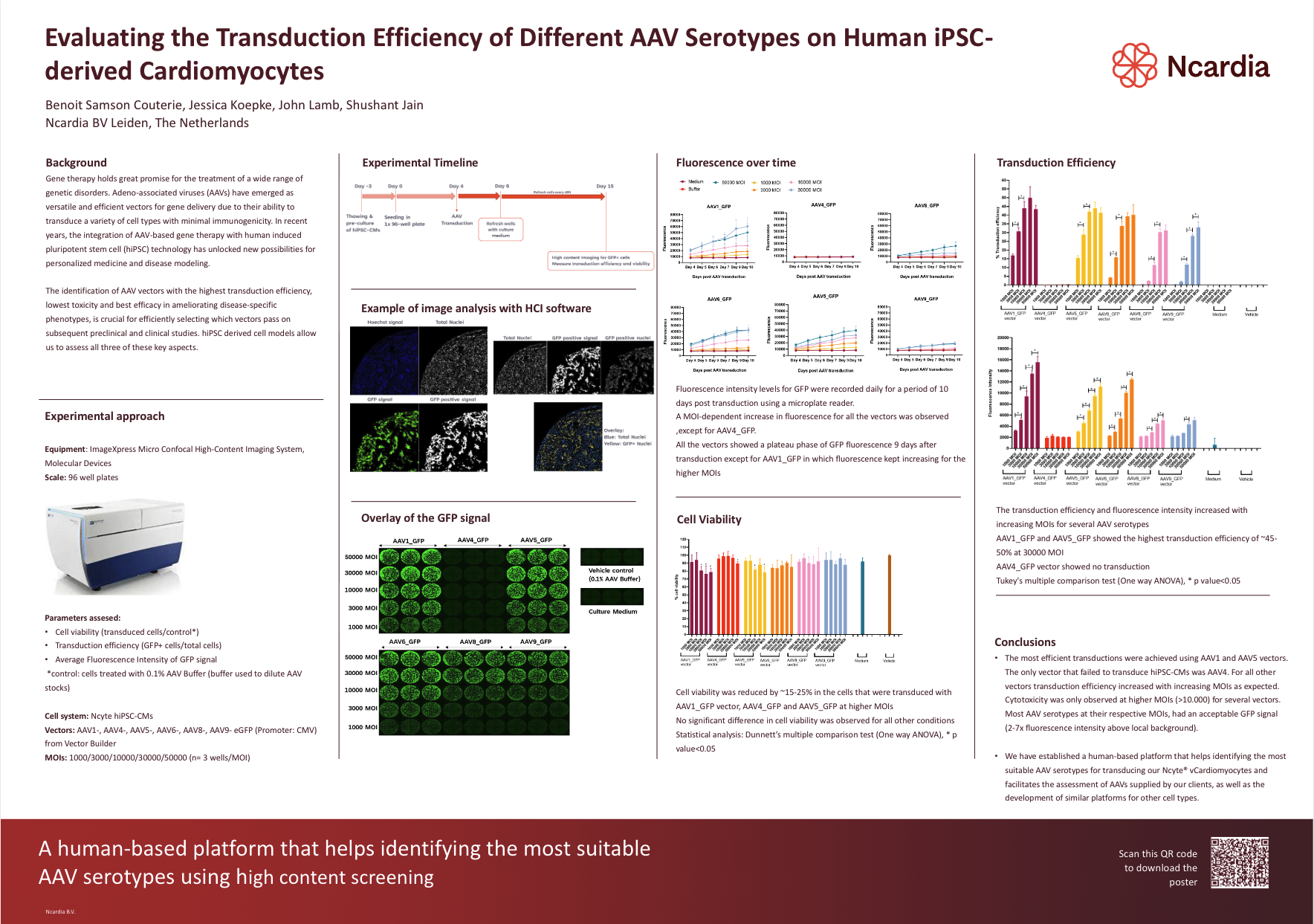
This poster presents a human-based screening platform developed by Ncardia to evaluate the transduction efficiency, cytotoxicity, and overall performance of multiple AAV serotypes in hiPSC-derived cardiomyocytes, supporting more informed vector selection for gene therapy applications. 

Download it now for a closer look at:

  • How different AAV serotypes perform in human iPSC-derived cardiomyocytes across a range of multiplicities of infection, highlighting clear differences in transduction efficiency and viability profiles 
  • How fluorescence intensity and GFP expression evolve over time, providing insight into vector performance and stability post-transduction
  • The relationship between increasing MOI and both transduction efficiency and cytotoxicity, supporting more balanced decision-making in vector selection 
  • How a standardized, high-content imaging platform enables reproducible comparison of AAV candidates in a human-relevant cardiac model 
  • Quantitative data showing that AAV1 and AAV5 achieve the highest transduction efficiencies, while AAV4 shows no measurable transduction in this system

Download the Poster


Get the Poster Now!

Whether you are optimizing gene delivery strategies or selecting vectors for preclinical development, this platform provides a scalable, human-relevant approach to evaluate AAV performance with greater confidence.

Download the poster by filling out the form below: