Skip to content

Investigating Translational Cardiac Drug Responses with NHP iPSC-Derived Cardiomyocytes

Non-human primate iPSC-derived cardiomyocytes for translational cardiac safety assessment
Download now
NHP_poster_act_2016

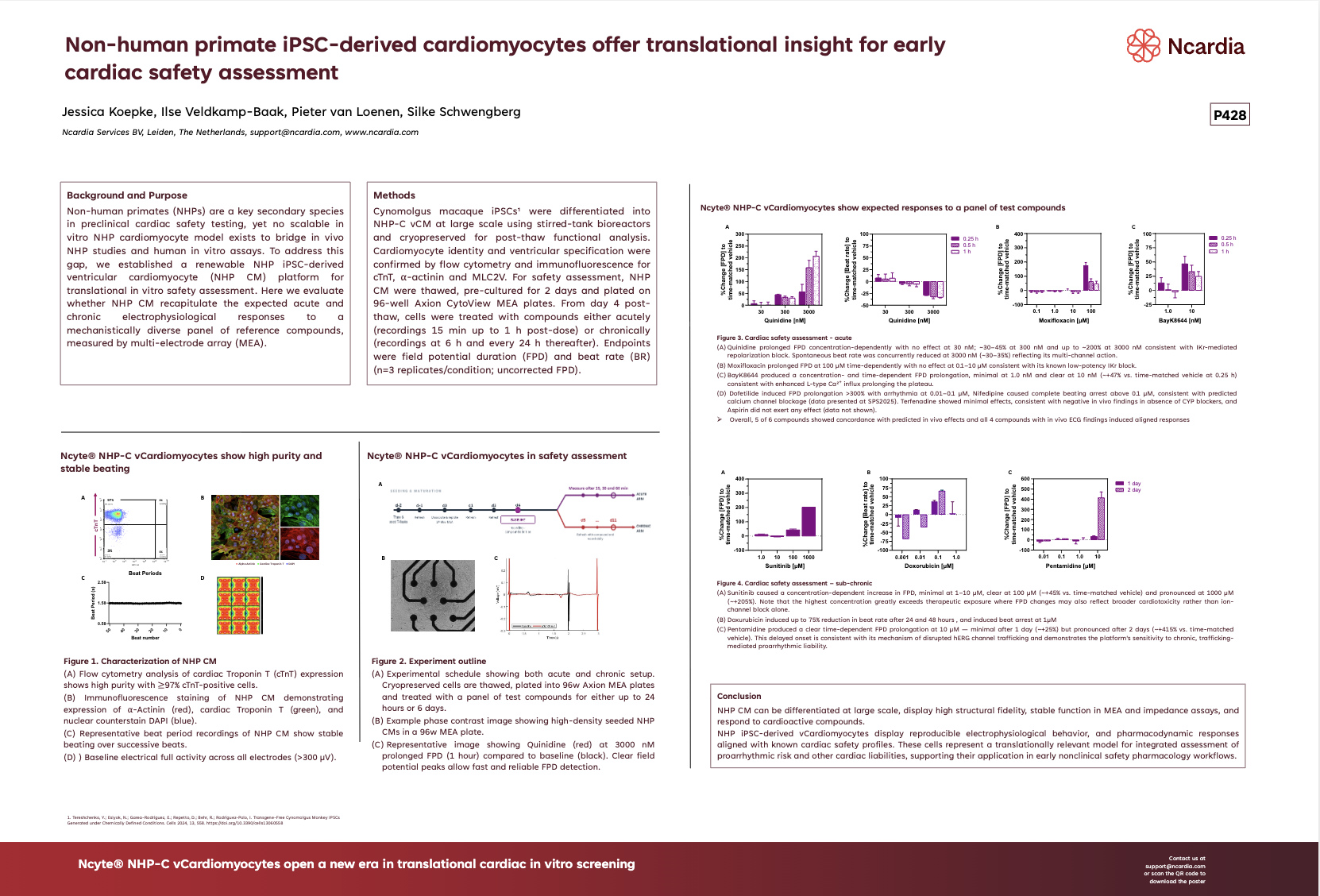
This poster presents Ncardia’s Ncyte® NHP-C vCardiomyocytes, a non-human primate iPSC-derived cardiac model designed to support translational safety research. Using electrophysiological assessments of reference compounds, the study explores how NHP cardiomyocytes respond to drugs with known cardiac effects, providing insights relevant to interpreting differences between in vitro and in vivo findings.

Download it now for a closer look at:

  • Characterisation of NHP iPSC-derived ventricular cardiomyocytes, demonstrating ≥97% cardiac troponin T-positive cells and stable spontaneous beating activity.

  • Acute electrophysiological responses to reference compounds including quinidine, moxifloxacin and BayK8644, measured using multi-electrode array (MEA) technology.

  • Sub-chronic cardiac effects of sunitinib, doxorubicin and pentamidine, including concentration- and time-dependent changes in field potential duration and beat rate.

  • Concordance with known in vivo cardiac effects, with 5 of 6 compounds showing responses consistent with predicted in vivo effects, supporting the use of NHP cardiomyocytes in translational cardiac safety investigations.

Download the Poster


Get the Poster Now!

Whether you are investigating discrepancies between human in vitro and animal in vivo findings or exploring species-specific cardiac drug responses, Ncyte® NHP-C vCardiomyocytes provide an additional in vitro model to support the interpretation of translational safety data.


Download the poster by filling out the form below: